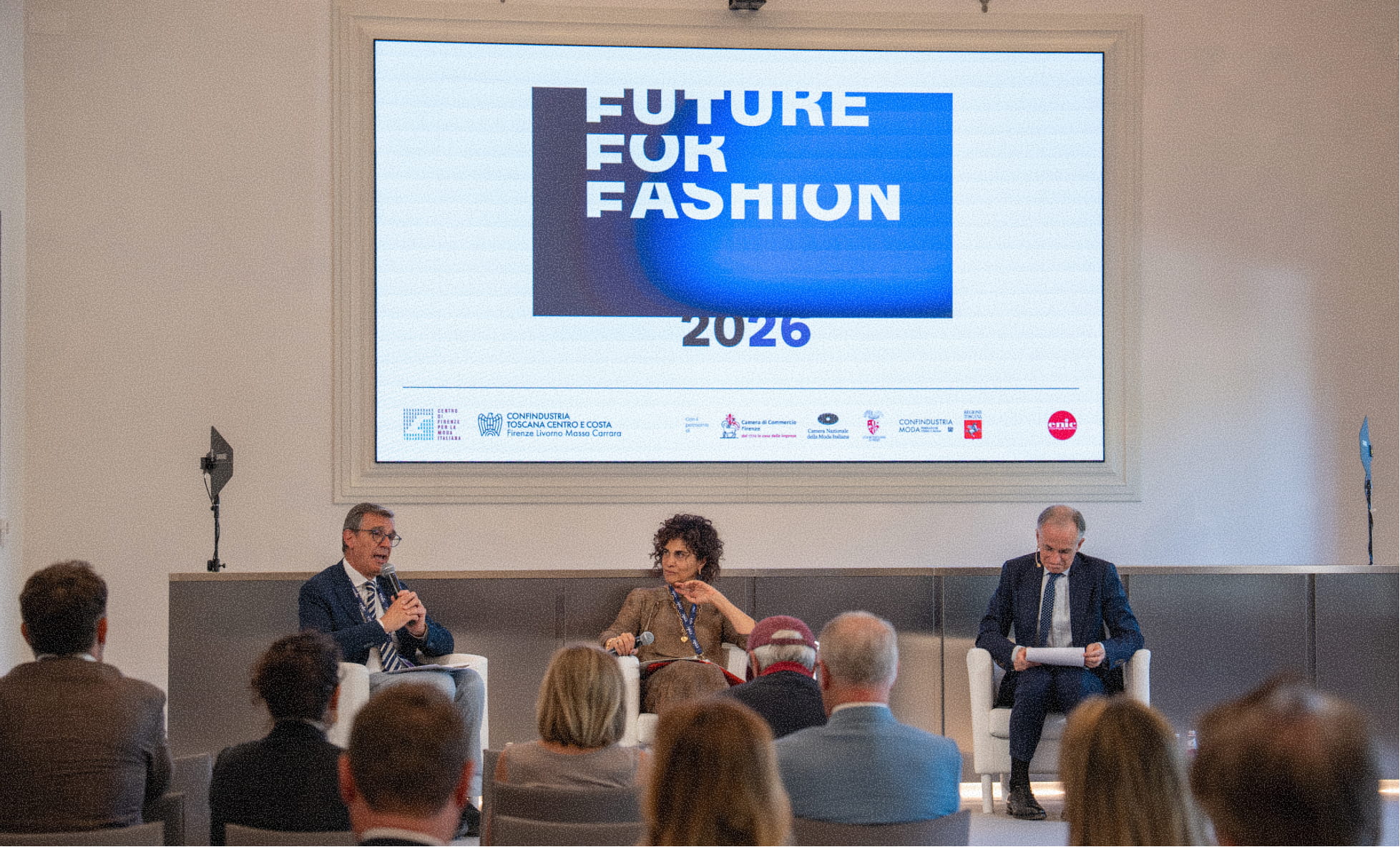
There are moments when a regulatory change becomes an opportunity to ask a broader question: what does it mean to do business in the textile industry today?
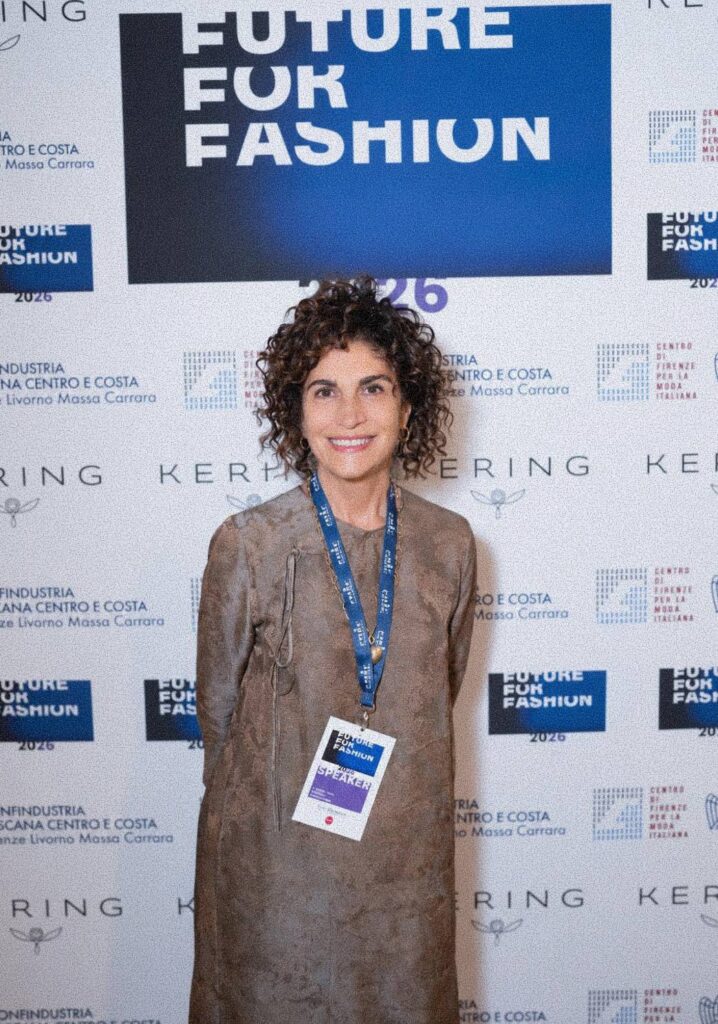
This reflection shaped the contribution of Cristina Catani, member of Lyria’s Board of Directors and CFO, at Future For Fashion 2026, the forum promoted by Confindustria Toscana Centro e Costa and the Centro di Firenze per la Moda Italiana. This year’s edition was dedicated to the theme “Moda: valori, talento ed esperienze.”
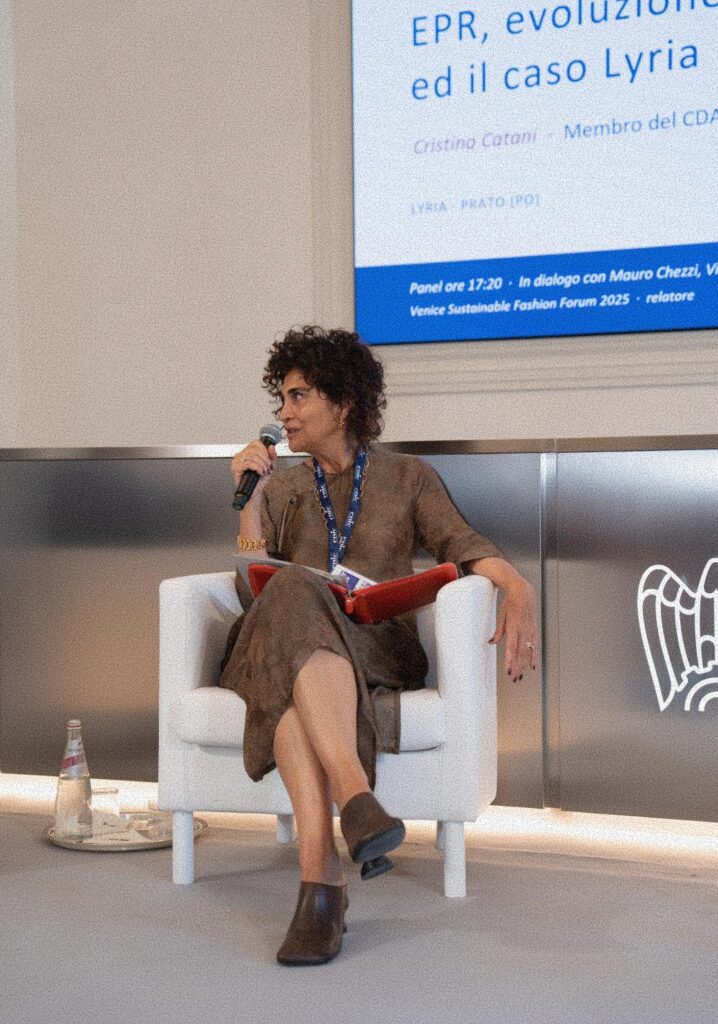
In conversation with Mauro Chezzi, Vicedirettore of Confindustria Moda, the discussion explored the evolution of the Responsabilità Estesa del Produttore legislation, known as EPR, and its implications for the Italian fashion system.
EPR represents one of the most significant changes the textile sector is preparing to face. The legislation assigns responsibility for a product’s entire lifecycle to those who place it on the market, from design through to end-of-life management, introducing new systems for traceability, separate waste collection and recycling. This is not simply a technical requirement, but a paradigm shift involving the entire supply chain.
For Lyria, however, many of these principles are not new.
Raw material traceability, research into circularity, attention to textile composition, the recovery and enhancement of production waste, and investment in environmental certifications have formed part of the company’s approach for many years. These practices did not emerge in response to legislation, but from a clear sense of responsibility towards materials, people and the local area.
At Lyria’s factory laboratory, sustainability is not defined by a single design decision. It is an ongoing process that runs through every stage of the work: from material research and production processes to upcycling projects, chemical traceability, the use of energy from renewable sources, and the development of an increasingly transparent supply chain. It is a vision that considers fabric not simply as a product, but as the result of a responsible relationship between knowledge, technical expertise and culture.
The new legislation therefore represents an important opportunity, but it also raises practical questions, particularly for the small and medium-sized enterprises at the heart of Made in Italy. Compliance requires investment in traceability systems, digital product passports, certifications and new management tools, bringing costs and complexities that cannot be overlooked. For the transition to be genuinely effective, it must be supported by shared tools, proportionate timelines and policies capable of assisting companies that choose to innovate.
For Lyria, the future of manufacturing will not be built by setting competitiveness against responsibility, but by recognising that today they are part of the same vision. Sustainability is neither a goal achieved once and for all nor simply a response to market demands. It is a corporate culture nurtured through dialogue, research and collaboration across the entire supply chain.
This is the true meaning of Lyria’s participation in Future For Fashion 2026: contributing to a collective conversation about the future of textiles, sharing experiences and perspectives in the belief that the most enduring form of innovation is that which creates value for people, local communities and future generations.